What Happened
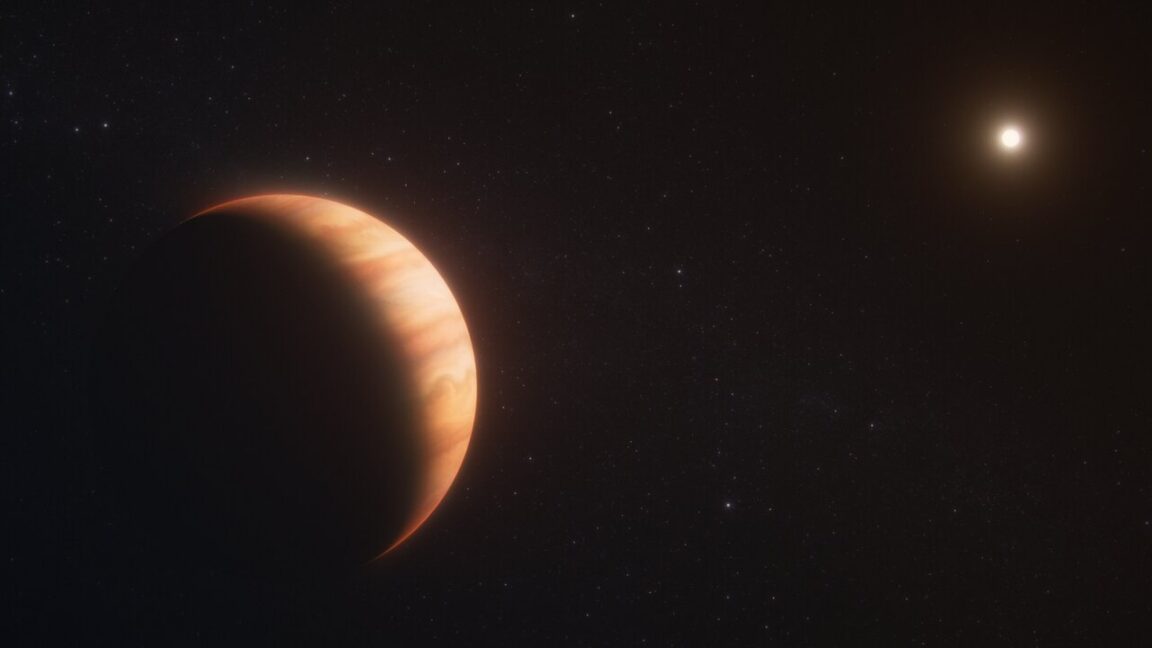
WD 1856 b is a remarkable discovery in the field of astronomy; it is the first confirmed instance of a planet that has survived the death of a Sun-like star. This gas giant, comparable in size to Jupiter, orbits a white dwarf, which is the remnants of a star that has exhausted its nuclear fuel and shed its outer layers. Recent observations made by the James Webb Space Telescope have provided new insights into this unusual planetary system, revealing characteristics that challenge our understanding of planetary formation and survival.
Why It Matters
The existence of WD 1856 b has significant implications for our understanding of planetary systems. The fact that a planet can endure the catastrophic transformation of its star—transitioning from a red giant to a white dwarf—suggests that planets may have more resilience than previously thought. This discovery opens up new avenues for research, prompting astronomers to reconsider the life cycles of planetary bodies and the conditions required for their survival during stellar death.
Context
The discovery of WD 1856 b was initially serendipitous. In 2020, astronomers used the TESS (Transiting Exoplanet Survey Satellite) to survey a group of around 2,000 white dwarfs, aiming to identify smaller objects like asteroids or comets. Instead, they stumbled upon a gas giant orbiting one of these dead stars, which stood out as an anomaly in the expected outcomes of their research. The unique circumstances surrounding WD 1856 b raise intriguing questions about the fate of planets in similar systems.
What It Means
The findings from the James Webb Space Telescope regarding WD 1856 b suggest that this planet may have formed in a very different environment compared to those in more stable systems. Its survival hints at the potential for other planets to exist in extreme conditions, even after their stars have died. This challenges existing models of planet formation and survival, indicating that our understanding of planetary systems is far from complete. As researchers continue to study WD 1856 b, it may reveal even more about the complex interactions between stars and their planets, reshaping our knowledge of the cosmos.