What Happened
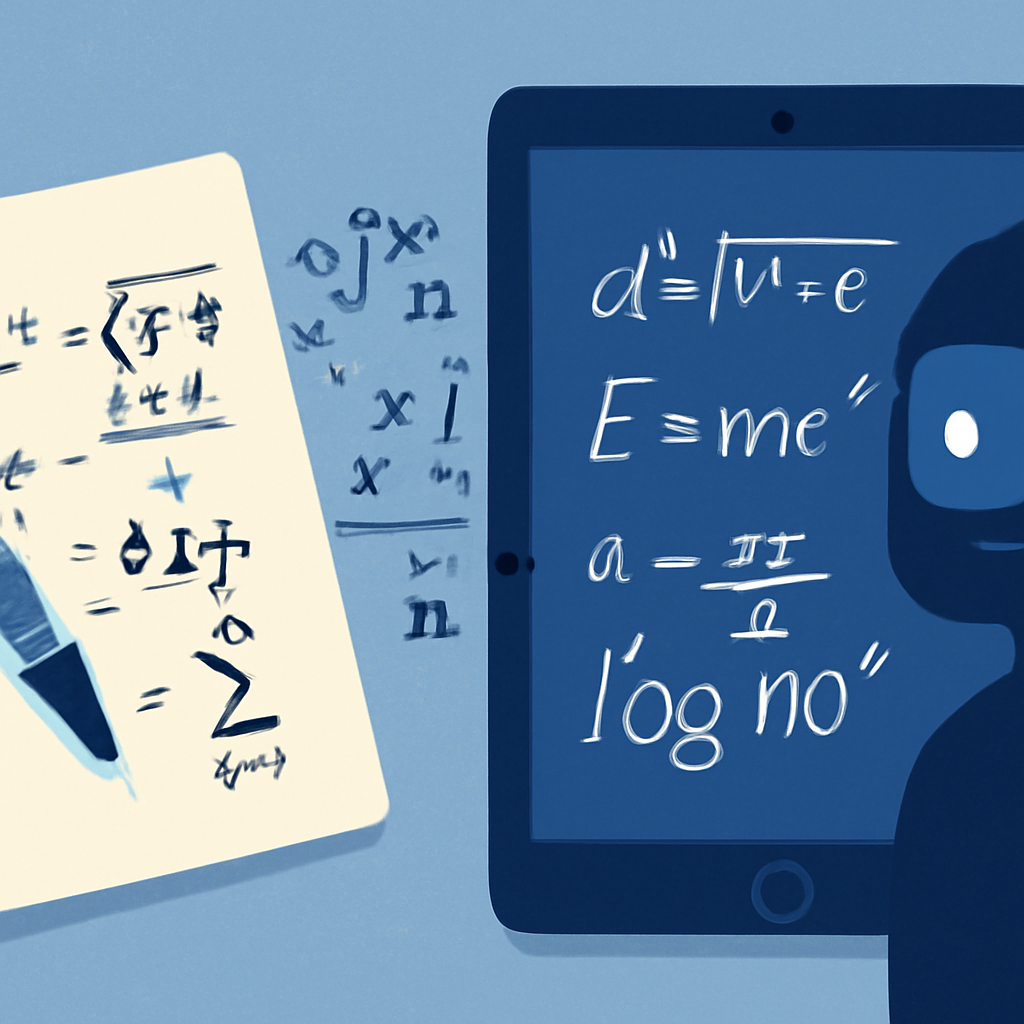
A researcher has created an innovative tool called PenEcho, an open-source canvas designed for users who often work with complex mathematical and physical concepts. This canvas allows users to handwrite equations and draw diagrams, while an AI model, GPT-5.6, provides real-time support by responding to handwritten notes directly on the canvas. This eliminates the need to switch between writing on a whiteboard and typing in a chat window.
Why It Matters
The ability to seamlessly integrate handwritten work with AI responses could significantly enhance productivity for researchers, educators, and students in STEM fields. By keeping the interaction within a single interface, users can maintain their thought process without interruptions, leading to more efficient problem-solving and exploration of ideas. This tool could also democratize access to AI assistance in academia, providing a low-cost solution for those needing clarifications or guidance on complex topics.
Context
Traditionally, communicating complex ideas in math and physics has involved cumbersome methods like typing out equations in a chat or using separate tools for writing and problem-solving. The advent of AI models capable of understanding images has opened the door to intuitive interactions between users and technology. PenEcho leverages this capability, allowing users to engage naturally with their work while receiving contextual feedback from the AI.
What It Means
The implementation of PenEcho represents a shift towards more interactive and user-friendly AI tools in academia. By offering a canvas that supports both handwritten input and AI-generated responses, this project could inspire further development of hybrid systems that enhance learning and collaboration. As more users provide feedback, the tool can evolve, improving its understanding of handwritten content and spatial contexts, ultimately making it a valuable asset for anyone working in math and physics.