The Gist
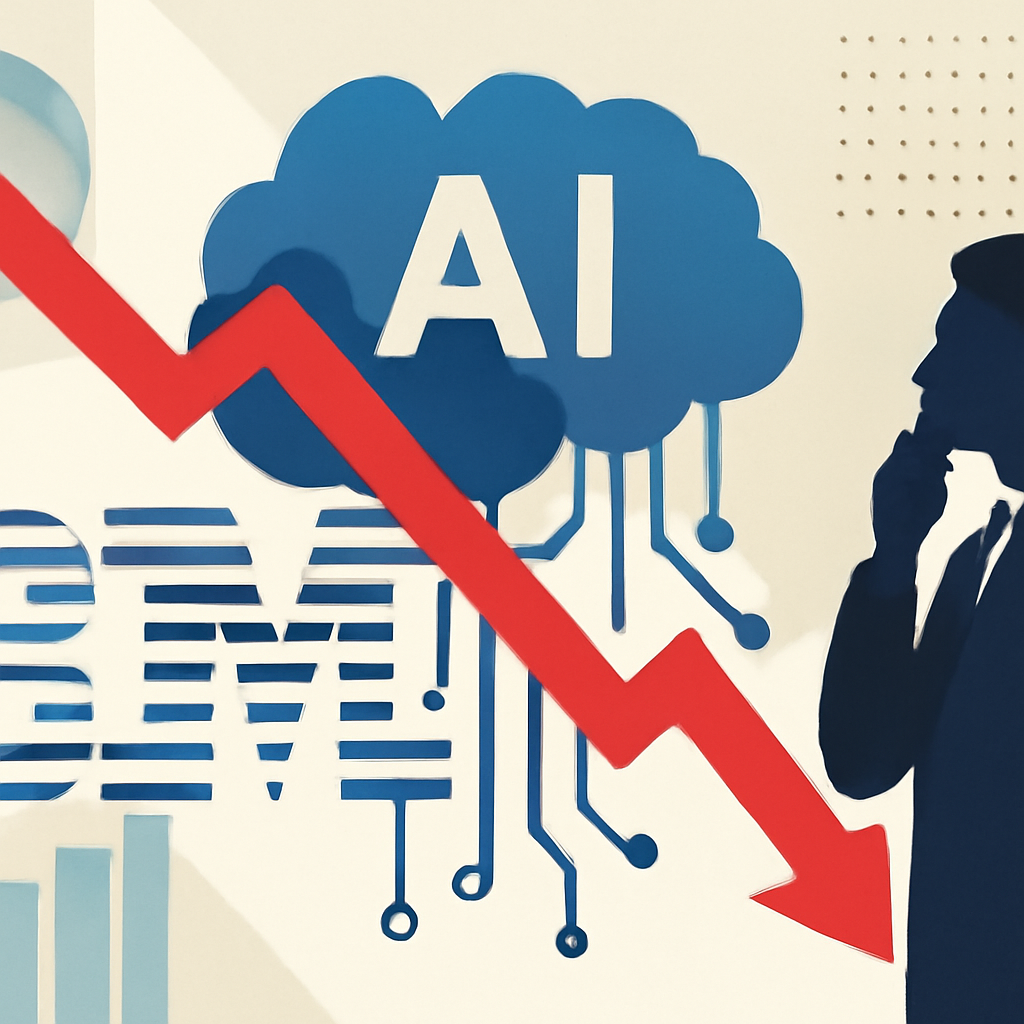
IBM's stock plummeted by more than 23% following a preliminary Q2 earnings report that revealed revenue expectations falling short of analyst predictions. The drop reflects a key issue: clients are reallocating capital expenditures (capex) from software services to AI-related hardware, impacting IBM's revenue stream.
How It Worked
IBM CEO Arvind Krishna indicated that the company did not foresee the extent of the capex shift toward AI infrastructure. In late June, clients prioritized purchases of servers, storage, and memory to prepare for impending price hikes, which altered their buying patterns. Consequently, IBM's software services, which typically yield higher margins, were deprioritized. Additionally, the company failed to close significant deals within expected timelines due to this unexpected shift, ultimately affecting their financial outlook.
Results
IBM projected Q2 2026 revenue at $17.2 billion, a mere 1% increase, and a Non-GAAP EPS of $2.93, a 5% rise. However, these figures fell short of analyst expectations, which were $17.86 billion and $3.01 EPS, respectively. The immediate result was a steep decline in stock price, reflecting investor discontent and uncertainty.
Why It Matters for You
This case illustrates the importance of agility in business strategy, especially in rapidly evolving markets like technology. Companies must stay attuned to client spending habits and market trends to avoid significant financial repercussions. Regularly reassessing business strategies in light of market changes can help businesses pivot effectively and maintain revenue growth.