What Happened
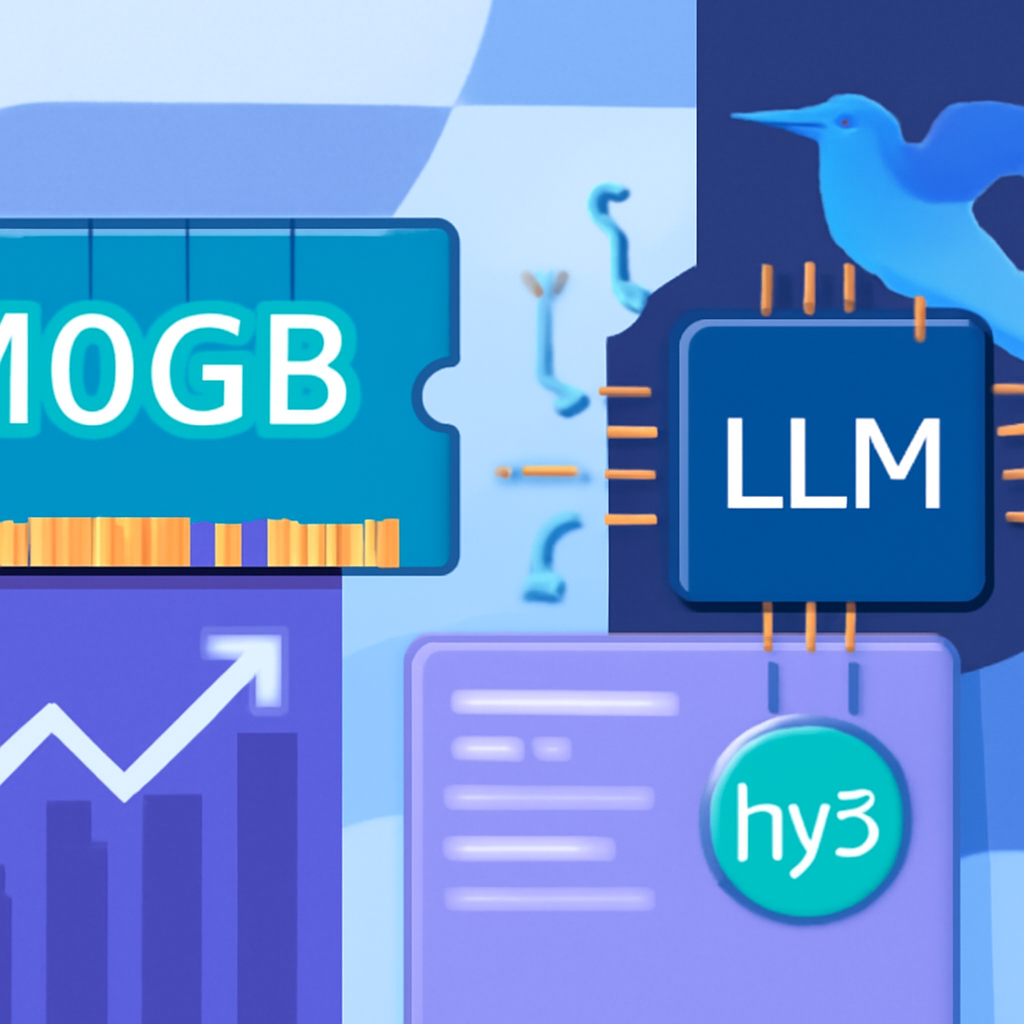
A developer has successfully adapted the Colibri AI framework to work with Hy3, significantly reducing the hardware requirements. Originally, Colibri required 25GB of VRAM to function with GLM 5.2, but this new port allows users to run it with only 10GB, and potentially even less. This makes powerful AI capabilities accessible to users with lower-spec machines.
Why It Matters
This development is crucial for users who may not have access to high-end hardware but still want to leverage advanced AI technologies. The reduction in hardware requirements means that more individuals and smaller organizations can experiment with and utilize these tools, democratizing access to AI resources. It could also lead to increased innovation as more people can now participate in AI research and development without the barrier of expensive equipment.
Context
Colibri is known for its efficiency in processing complex AI tasks. By porting it to work with Hy3 and reducing the RAM requirements, the developer builds on the foundation laid by previous iterations of Colibri, which catered to users with more powerful hardware. This shift reflects a growing trend in the AI community toward making models more adaptable and accessible, allowing for greater experimentation and application in various fields.
What It Means
The ability to run Colibri on just 10GB of RAM opens up new possibilities for developers and researchers. It signifies a shift in how AI models are being optimized for efficiency and accessibility. As more users adopt these technologies, we may see an explosion of innovative applications and solutions in various industries, from tech startups to educational institutions. This port is not just a technical achievement; it represents a step toward a more inclusive AI landscape.