What Happened
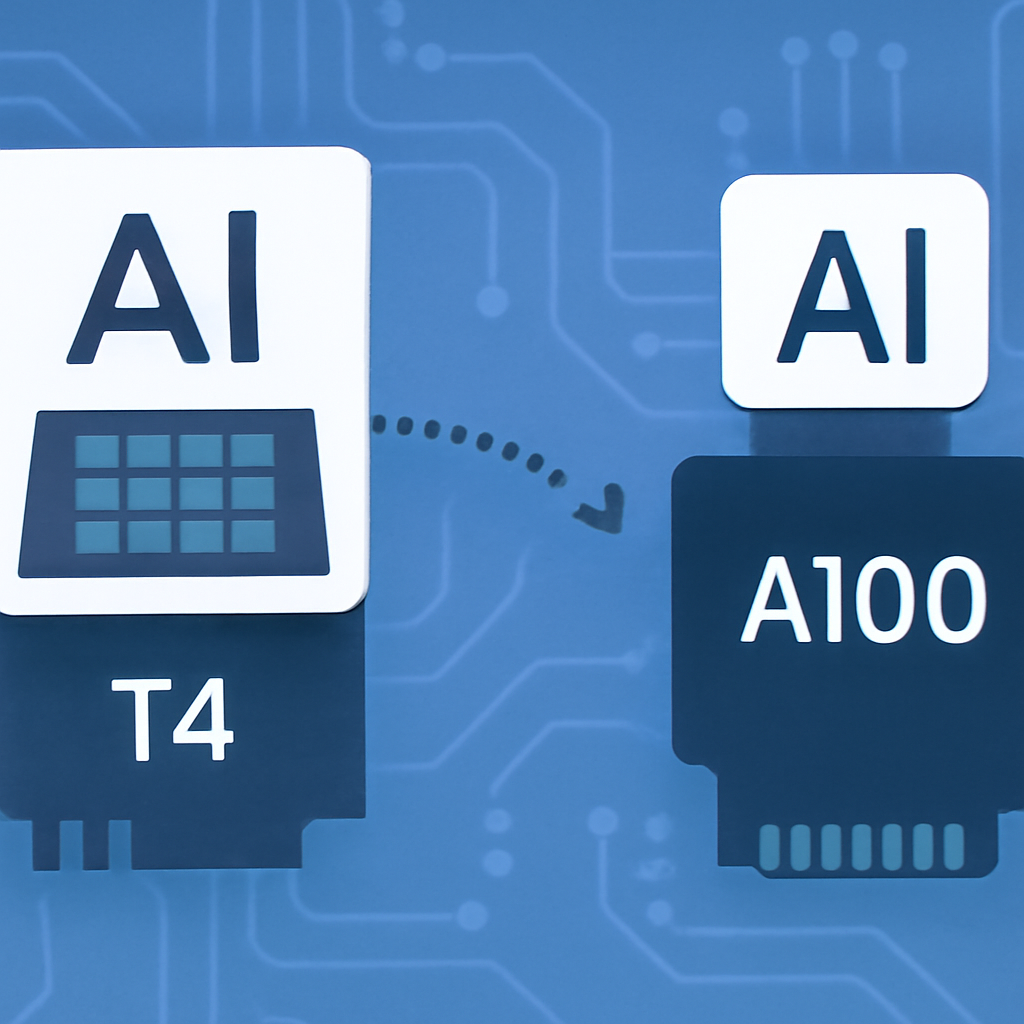
A user has reported an astonishing 170× performance drop when running a point-tracking model on an NVIDIA T4 GPU as opposed to an A100. The tracker processes a video of 47 frames at a resolution of 256×256, taking approximately 0.5 seconds on the A100, while the same task stretches to about 85 seconds on the T4. This significant discrepancy raises questions about the underlying causes of such a slowdown.
Why It Matters
Understanding the reasons behind this performance gap is crucial for developers and researchers relying on GPU acceleration for deep learning tasks. A dramatic slowdown can lead to inefficiencies and wasted resources, ultimately affecting project timelines and outcomes. Identifying the bottleneck can help optimize code and leverage hardware capabilities effectively.
Context
The A100 and T4 GPUs belong to different generations and are designed for varying workloads. The A100, part of NVIDIA's Ampere architecture, is built for high-performance computing and deep learning tasks, while the T4 is optimized for inference and less demanding workloads. Despite the expected performance differences, a 170× slowdown suggests that other factors are at play, especially since the user has ruled out common issues like GPU utilization and driver problems.
What It Means
Several factors could explain the drastic performance difference. The T4's architecture may not handle the 4D correlation volume calculations as efficiently as the A100, given its design priorities. Additionally, the model's reliance on pure FP32 execution could be a limiting factor, as the T4 may not leverage tensor cores as effectively as the A100 does. It would be prudent to profile the model's execution to identify specific bottlenecks, such as memory bandwidth limitations or inefficiencies in the model architecture itself. Investigating whether mixed precision or different batch sizes yield better performance could also provide insights into optimizing the model for T4. Understanding these nuances is essential for maximizing the performance of deep learning models across different GPU architectures.