What Happened
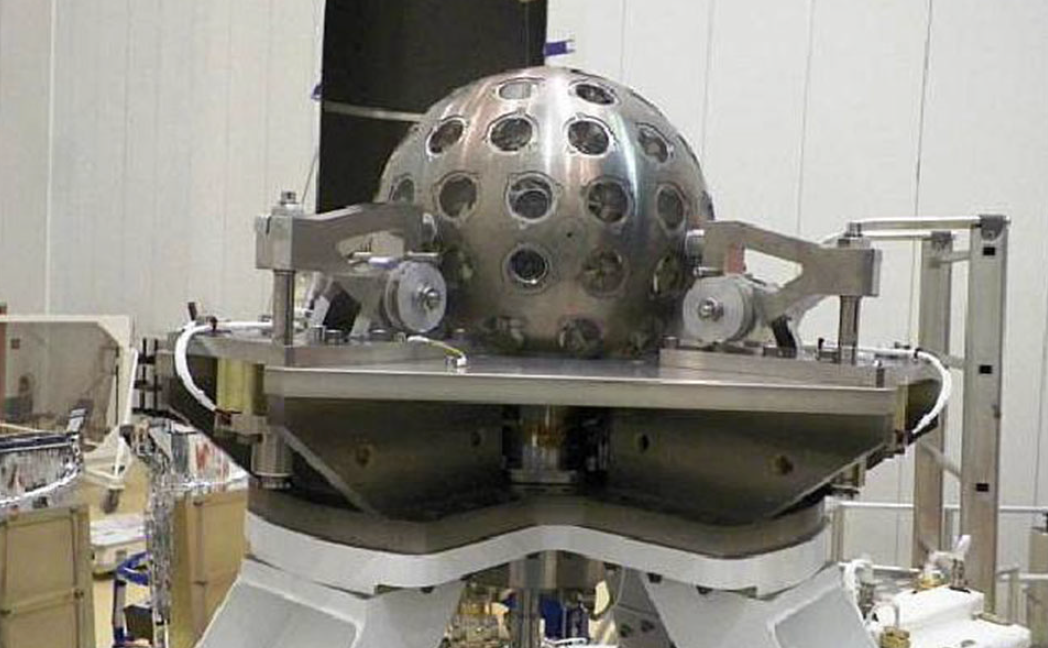
A team of astronomers has achieved a groundbreaking measurement of the Lense-Thirring effect, a prediction of Einstein's general theory of relativity. Using a satellite designed to resemble a hybrid of a golf ball and a disco ball, they have successfully measured how the Earth’s rotation affects the fabric of spacetime. This measurement significantly reduces the uncertainty of frame dragging effects from several percentage points to just 0.2 percent, marking a notable advancement in our understanding of gravitational physics.
Why It Matters
This achievement is crucial not just for astrophysics but for the broader field of physics. Frame dragging is a subtle effect that illustrates how massive objects like planets and black holes influence spacetime. By providing a more accurate measurement of this effect on Earth, the research enhances our understanding of general relativity, potentially impacting various applications, including GPS technology and satellite navigation systems, which rely on precise gravitational models.
Context
The Lense-Thirring effect has been studied primarily in the context of massive celestial bodies, such as black holes. Historically, measuring this effect on Earth has been challenging due to its relatively small mass and slower rotation compared to these larger objects. Previous attempts to quantify frame dragging on our planet resulted in greater uncertainties, making this new measurement a significant milestone in the ongoing exploration of general relativity.
What It Means
The reduction in uncertainty to 0.2 percent means that scientists can now have greater confidence in predictions related to spacetime behavior around Earth. This could lead to improved models in gravitational physics and enhance our understanding of fundamental forces. Furthermore, it opens the door for future experiments and observations that might explore even more complex aspects of Einstein's theories, potentially leading to new discoveries in the realm of astrophysics and beyond.