What Happened
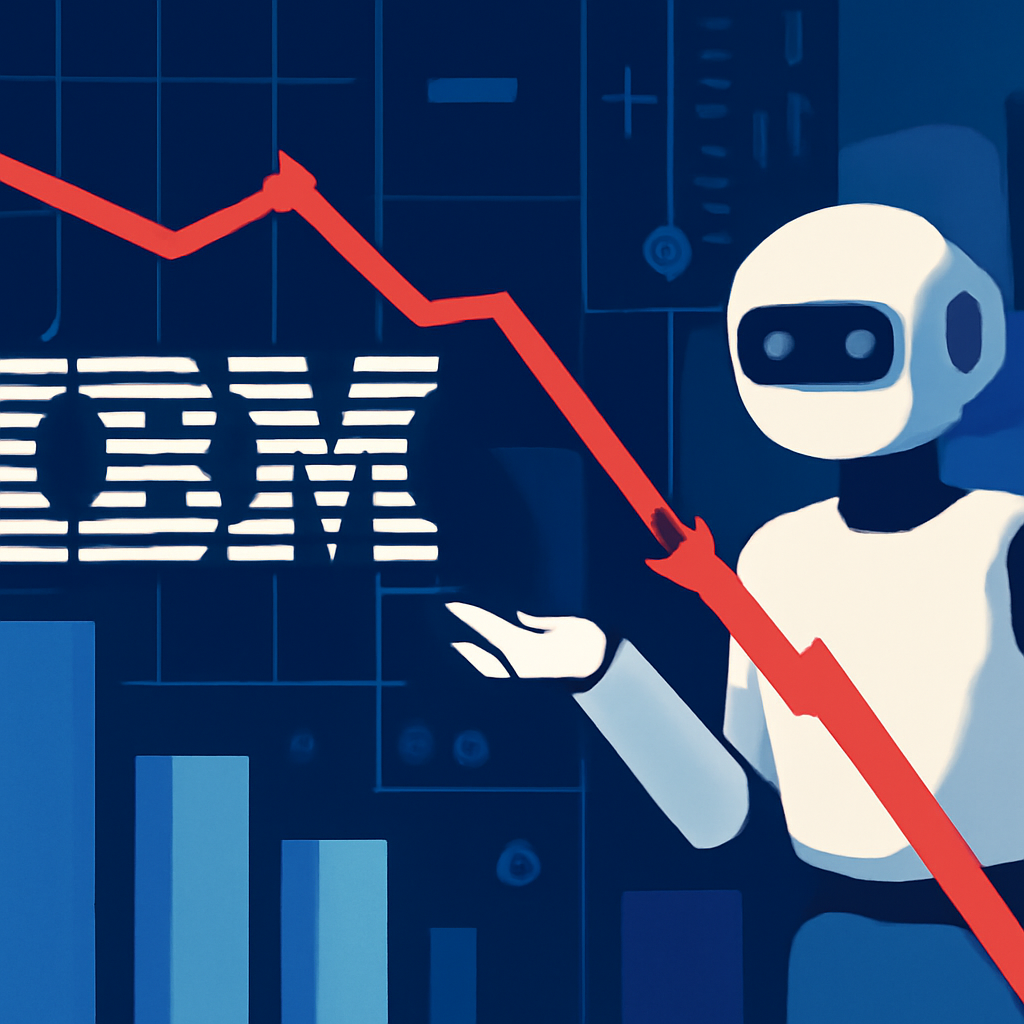
On July 14, IBM's stock fell by 25%, marking its largest drop since 1968. The share price hit $217.07, and the company's market capitalization shrank by $69 billion. The primary cause of this dramatic decline was the company's second-quarter 2026 revenue falling short of investor expectations by just $700 million.
Why It Matters
The collapse of IBM's stock serves as a significant signal for the tech market. Investors have started to panic as the company's clients are postponing spending on traditional products in favor of investing in artificial intelligence infrastructure. This shift could indicate changing priorities in the IT sector, where AI is becoming more critical than traditional computing solutions.
Context
IBM, renowned for its achievements in personal computing and technology, has been facing increasing competition from companies specializing in AI in recent years. CEO Arvind Krishna had previously warned that the rapid increase in data center expenses is linked to economic instability. In May, IBM itself invested $5 billion in AI, but it seems this has not yielded the expected results.
What This Means
For IBM and its investors, this stock decline may necessitate a reevaluation of its business strategy. If clients prefer to allocate funds toward AI development, the company will have to adapt to the new market conditions. IBM may need to focus more on its AI product offerings to restore investor confidence and improve financial performance in the future.