What Happened
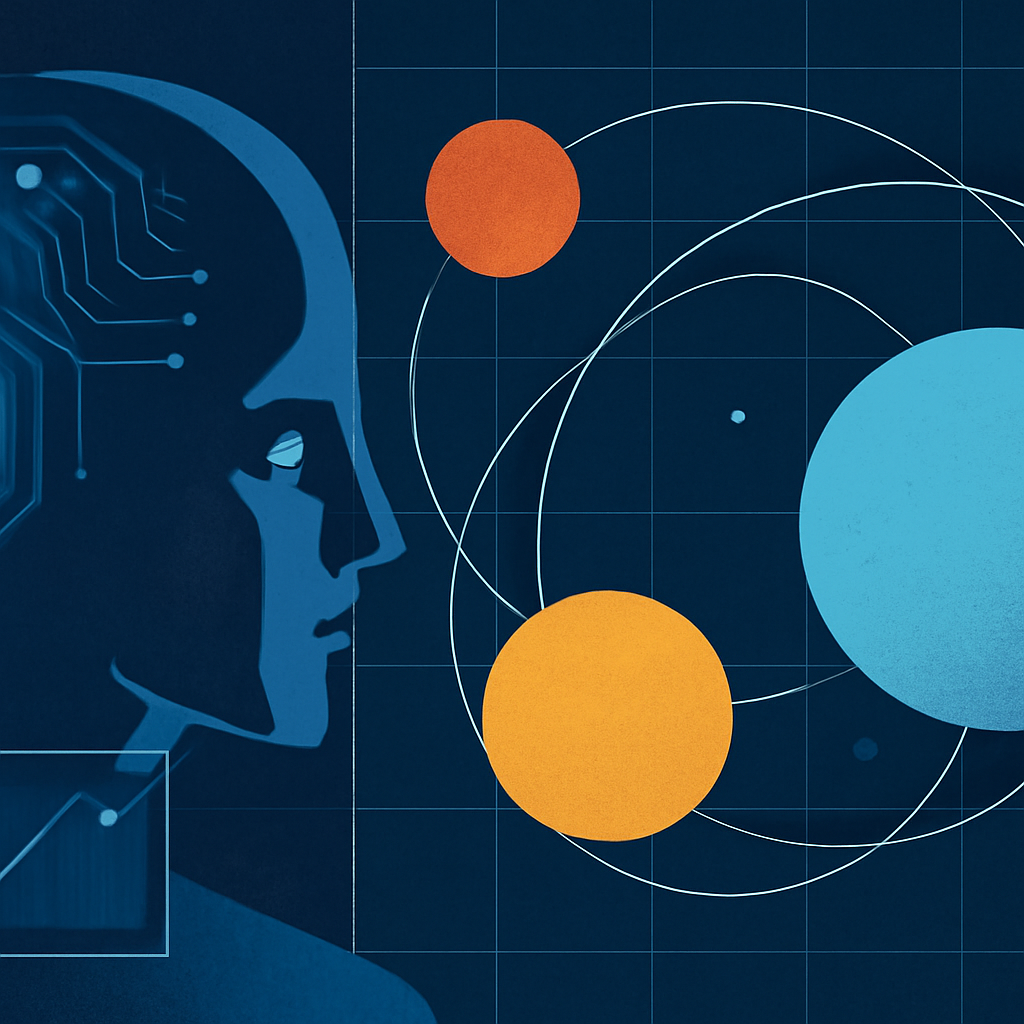
A new interactive website called Three-Body Lab has been developed to simulate the three-body problem, a well-known challenge in physics. This simulation was created using advanced web technologies like React, TypeScript, and Vite. Unlike basic simulations that simply display dots moving around, this tool provides a detailed numerical gravity workbench that accurately models the gravitational interactions between three bodies.
Why It Matters
This project showcases the capabilities of AI in not just generating code, but in solving complex scientific problems. The simulation employs various numerical integrators, allowing users to explore different methods for understanding chaotic systems. With features that report on the accuracy of the simulation, users can see how small changes in initial conditions can lead to vastly different outcomes. This has significant implications for education and research, offering an accessible way for students and professionals to explore celestial mechanics and chaos theory.
Context
The three-body problem has perplexed scientists for centuries, as it lacks a general closed-form solution. The challenge lies in the deterministic nature of the equations governing the system, which can lead to chaotic behavior. By providing a browser-based tool that accurately simulates this problem, the developers have created a valuable resource for both learners and researchers interested in gravitational dynamics.
What It Means
The development of Three-Body Lab marks a significant step in using AI for scientific simulations. It demonstrates that AI can integrate knowledge across multiple disciplines, including physics, numerical analysis, and software engineering. The project not only highlights AI's potential in automating complex tasks but also emphasizes the importance of rigorous testing and validation in scientific computing. This could pave the way for more ambitious AI-driven projects that tackle other intricate scientific challenges, further bridging the gap between technology and science.