What happened
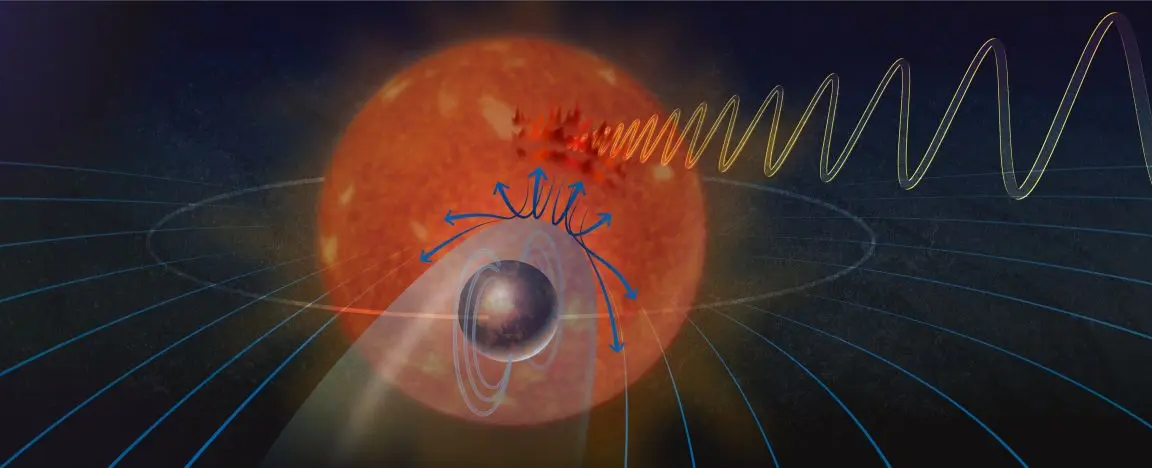
A recent discovery has revealed that a planet is orbiting its star so closely that the magnetic fields of both bodies are interacting. This phenomenon is not only unusual but also leads to periodic brightening that researchers have linked to the magnetic connection between the star and the planet.
Why it matters
This finding is significant as it challenges our traditional understanding of planetary systems. The interaction between the magnetic fields could have profound effects on the planet's atmosphere and surface conditions, potentially affecting its habitability. It also opens up new avenues for research on how different planetary systems function, particularly those with extreme conditions.
Context
Historically, Mercury was the closest planet to the Sun, setting the standard for what we considered 'close' in our solar system. However, the discovery of exoplanets has shown us that many planets exist in much tighter orbits, with some completing a full revolution around their stars in just days. This has led to unexpected atmospheric phenomena, including metal vapor and low-density atmospheres. Researchers have theorized that strong magnetic fields from closely orbiting planets could interact with their stars, and this recent finding provides concrete evidence of such interactions.
What it means
The discovery of overlapping magnetic fields between a close-orbiting planet and its star suggests that our understanding of planetary systems may need to evolve. It emphasizes the complexity of interactions in these extreme environments and raises questions about the implications for other exoplanets. The evidence of magnetic field interactions opens up a new chapter in exoplanet research, inviting scientists to explore how these dynamics influence planetary atmospheres and potentially the conditions for life beyond our solar system.