What Happened
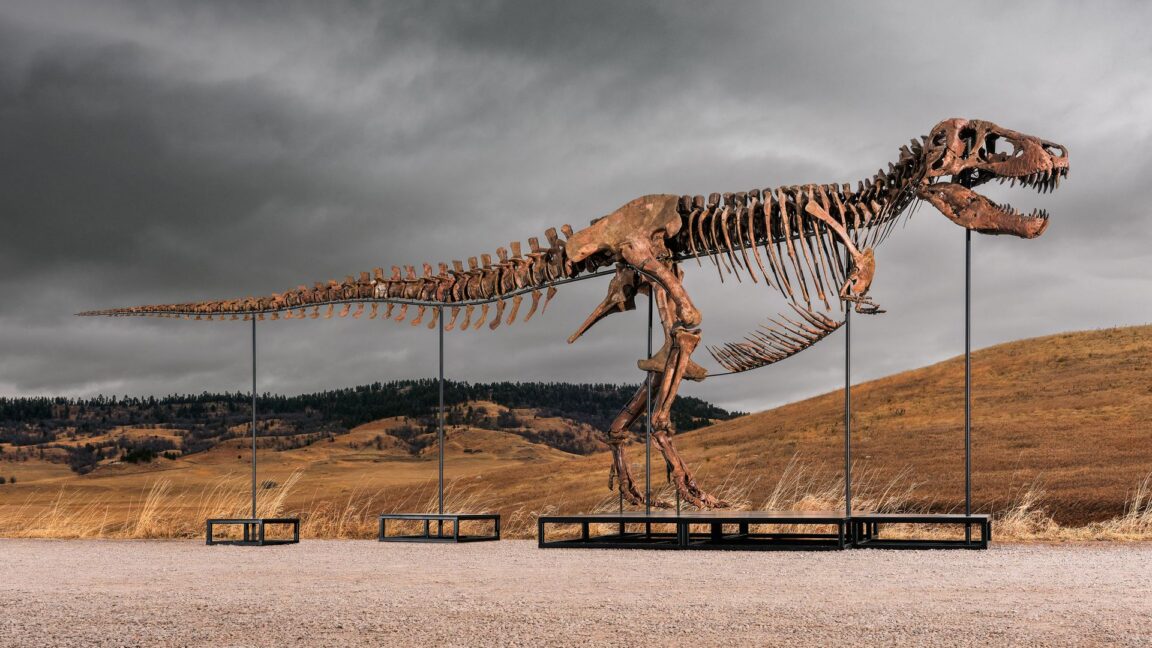
Sotheby’s is preparing for a monumental auction featuring various fossils, with the highlight being a 67-million-year-old Tyrannosaurus rex skeleton named Gus. This extraordinary specimen is considered one of the largest and most complete T. rexes ever discovered, boasting 183 fossil bone elements and an impressive 61% completeness by bone count. As bidding opens, Gus is expected to sell for as much as $30 million, drawing interest from both private collectors and public museums.
Why It Matters
The growing trend of private collectors purchasing fossils at auctions raises significant concerns for the scientific community. When fossils are sold as luxury items, they often end up in private collections rather than being accessible for research and education. This shift can effectively erase valuable pieces of history from scientific inquiry, limiting opportunities for paleontologists to study them and share knowledge with the public.
Context
The auction of Gus is not just a simple sale; it symbolizes a broader trend where auction houses are fueling excitement and competition among affluent buyers. Paleontologists have expressed worry that the escalating prices and hype surrounding fossil auctions could prioritize profit over preservation. This has led to a scenario where invaluable scientific specimens might be lost to the public and academia, as private collectors often keep them hidden away.
What It Means
The upcoming auction of Gus highlights a critical intersection between wealth and science in paleontology. While such fossils can provide immense educational value, their sale to the highest bidder poses a threat to public access and scientific research. The outcome of this auction could set a precedent for future fossil sales, potentially shaping the landscape of paleontological research for years to come. It raises an essential question: should the wonders of our past be treated as commodities, or preserved as treasures for the collective understanding of humanity?