What Happened
Google has made a significant advancement in quantum computing by discovering a method for constant recalibration of quantum processors. Traditionally, calibration of qubits is a separate process that cannot occur while computations are being performed, leading to issues with error rates. However, Google’s innovative approach allows calibration to be integrated with error correction, using the same data to ensure optimal performance throughout complex calculations.
Why It Matters
This development is crucial because it addresses one of the key hurdles in quantum computing: maintaining accuracy over time. As quantum algorithms become longer and more intricate, the risk of errors increases due to variations in qubit behavior. By allowing ongoing recalibration, Google’s technique could enhance the reliability and efficiency of quantum computers, making them more viable for practical applications. This could accelerate advancements in fields that rely on quantum computations, such as cryptography and complex modeling.
Context
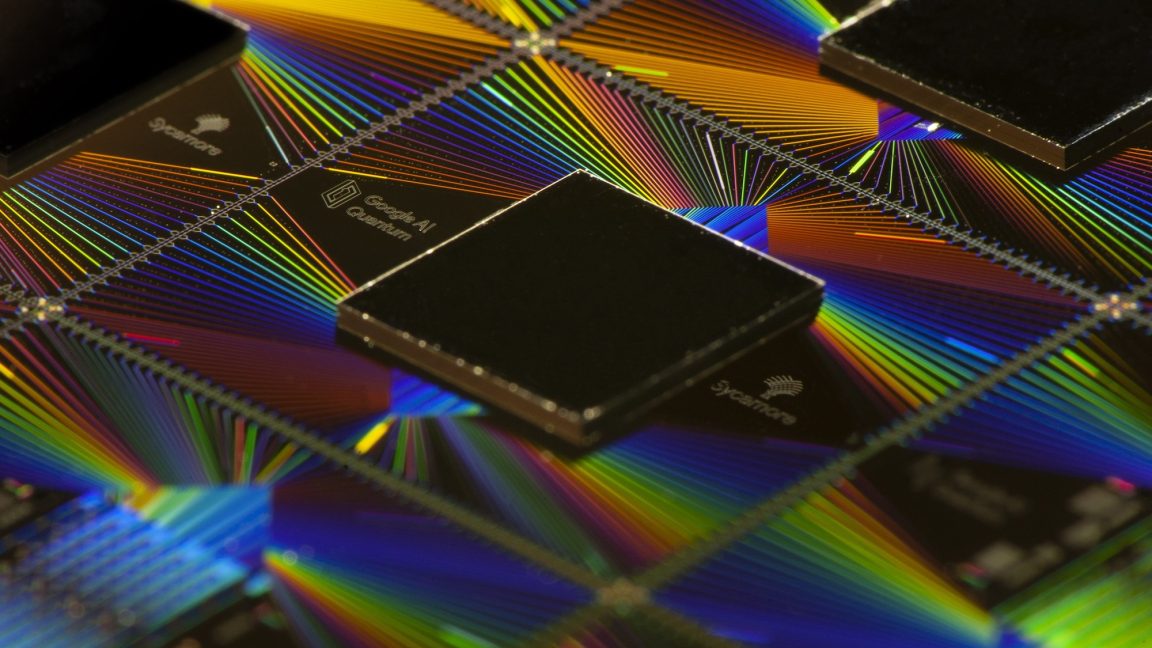
Quantum computing is still in its infancy, facing numerous challenges before becoming mainstream. One of the main issues is the quality and stability of qubits. Superconducting qubits, which Google utilizes, often exhibit slight variations that can hinder performance. Calibration processes have traditionally been a workaround but are limited in their ability to adapt during calculations, resulting in potential errors as the qubits drift.
What It Means
The ability to recalibrate qubits in real-time could revolutionize the way quantum computers operate. It suggests a shift toward more autonomous systems that can self-correct, reducing the need for extensive pre-calibration and allowing for longer computational tasks without compromising accuracy. This could lead to a new era of quantum computing where machines are more resilient to errors, ultimately unlocking their full potential for solving complex problems efficiently.