What Happened
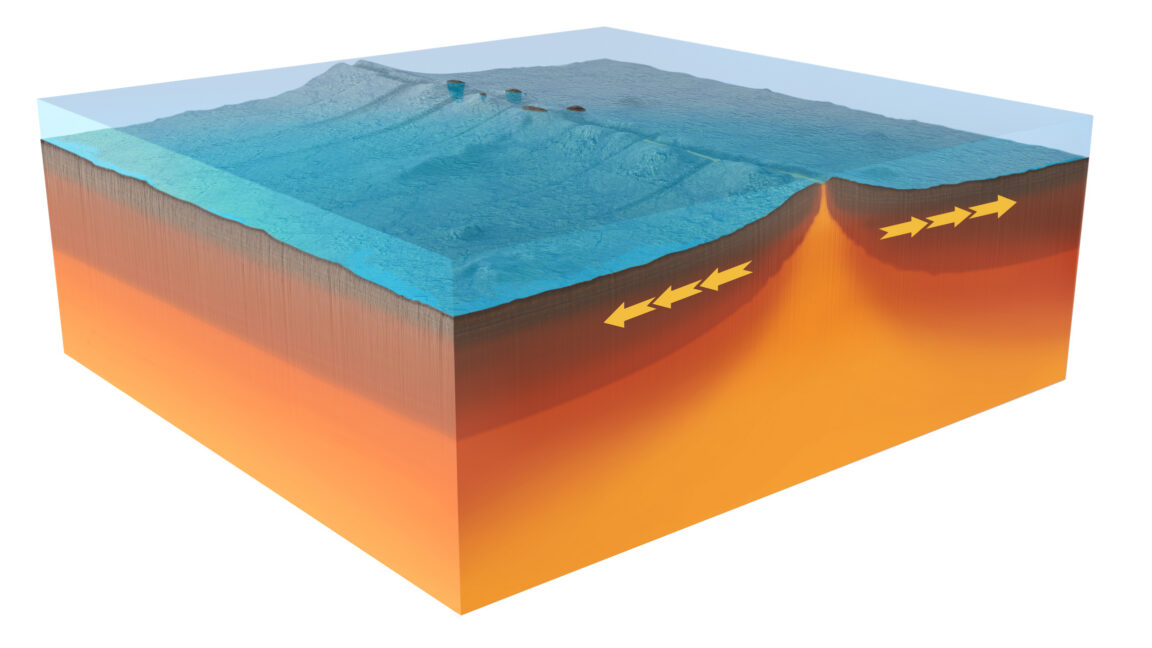
A team of French scientists made a significant discovery regarding the formation of new ocean crust at mid-ocean ridges. They monitored the interaction between the Australian and Antarctic tectonic plates and found that a substantial amount of crustal spreading happened in a surprisingly short time frame. This event was observed just two months after they installed new monitoring equipment on the ocean floor, highlighting the rapid changes occurring in this region.
Why It Matters
The findings challenge existing notions about how ocean crust is formed. Previously, scientists understood the end result of crust formation but lacked detailed insights into the actual processes involved. The rapid and seemingly quiet nature of this spreading event raises questions about the dynamics of plate tectonics and could have implications for understanding seismic activity in other regions of the world.
Context
Mid-ocean ridges are crucial to the theory of plate tectonics, as they are where new crust forms and continents are pushed apart. For decades, researchers have explored these areas, creating a solid foundation of knowledge about their structures. However, gaps remain in our understanding of the specific mechanisms that drive crust formation. This recent study represents a step forward in bridging that gap.
What It Means
The results from the French team suggest that significant geological events can occur with little to no corresponding seismic signals, which may lead to a reevaluation of how we monitor and predict tectonic movements. As scientists delve deeper into these processes, we may gain a clearer picture of how our planet's crust is continuously reshaped, enhancing both our geological knowledge and our ability to anticipate natural phenomena associated with tectonic activity.