What Happened
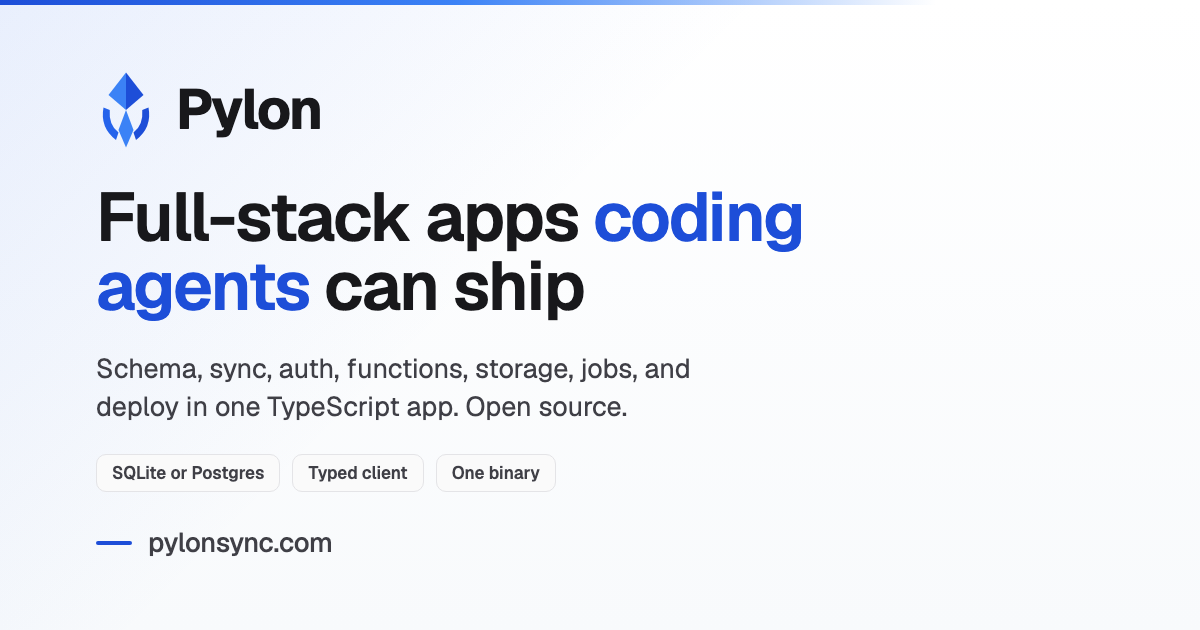
Pylon Sync has been introduced as a full-stack, real-time framework designed to streamline the development process for both hobbyists and professional developers. It integrates server-rendered React, TypeScript functions, real-time synchronization, and built-in authentication, making it easier to create and deploy web applications without the traditional complexities.
Why It Matters
For developers, particularly those transitioning from personal projects to production apps, Pylon Sync offers a significant reduction in setup time and complexity. By consolidating various components into one framework, it allows developers to focus on building features rather than wrestling with deployment configurations. The emphasis on agent compatibility ensures that even those with minimal setup experience can successfully launch applications. This could potentially disrupt the market for existing frameworks and services that require more intricate setups.
Context
Historically, building web applications often required a separation between frontend and backend components, leading to time-consuming configurations and deployments. Many developers rely on tools like React and Next.js for quick prototypes but face challenges when scaling to production-level applications. Pylon Sync draws inspiration from Rails, prioritizing ease of use and convention over configuration, which has become increasingly important in today’s fast-paced development environment.
What It Means
The introduction of Pylon Sync signifies a shift towards more accessible web development frameworks. With features like real-time sync, background job management, and a straightforward deployment process, it appeals to a wide range of developers, from hobbyists to seasoned professionals. The ability to self-host or utilize managed cloud services provides flexibility, catering to different needs and preferences in the developer community. As Pylon Sync gains traction, it may encourage more developers to embark on ambitious projects without the fear of heavy infrastructure setups.