What happened
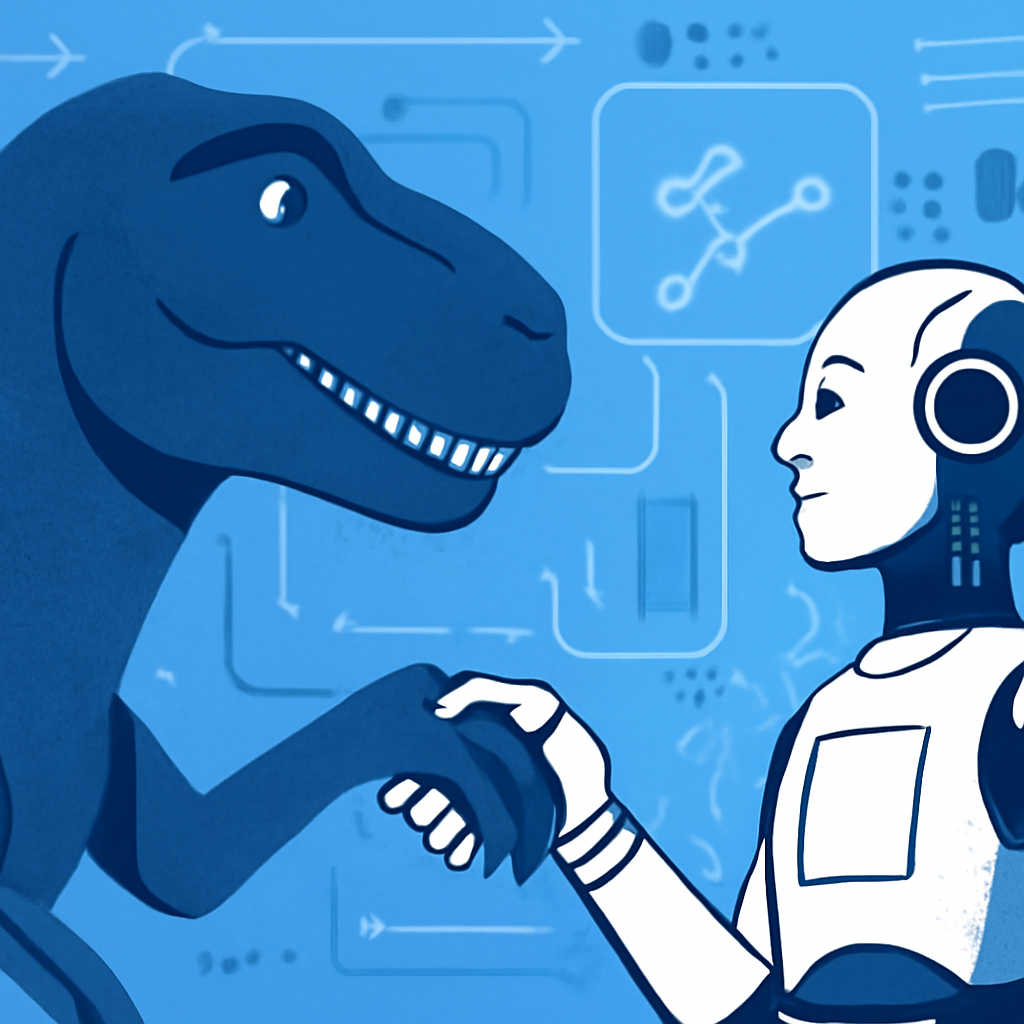
Researchers from UC Berkeley, Nvidia, and Stanford have developed a new framework called T-Rex, which allows robots to unify their responses by integrating vision, language, and tactile sensing. This advancement means robots can react to physical contact in real time, enhancing their capabilities beyond relying solely on visual input.
Why this matters
The introduction of T-Rex has significant implications for the robotics industry. By enabling robots to sense touch, it opens up new possibilities for applications in fields such as healthcare, manufacturing, and service industries. Robots that can respond to tactile information could perform more complex tasks, improving their efficiency and safety when interacting with humans and objects.
Context
The development of T-Rex is built on a robust dataset collected over 100 hours, which includes tactile-synchronized teleoperation data featuring more than 200 everyday objects. The researchers utilized specialized gloves to capture precise finger motions, which were then applied to advanced robotic hands. This extensive dataset provides a foundation for teaching robots how to interpret and respond to tactile feedback effectively.
What this means
The integration of tactile sensing with visual and linguistic capabilities represents a significant step forward in creating more versatile and responsive robotic systems. As robots become better at understanding and interpreting their environments through touch, we can expect to see them take on more sophisticated roles in various sectors, ultimately leading to improved human-robot collaboration.