What Happened
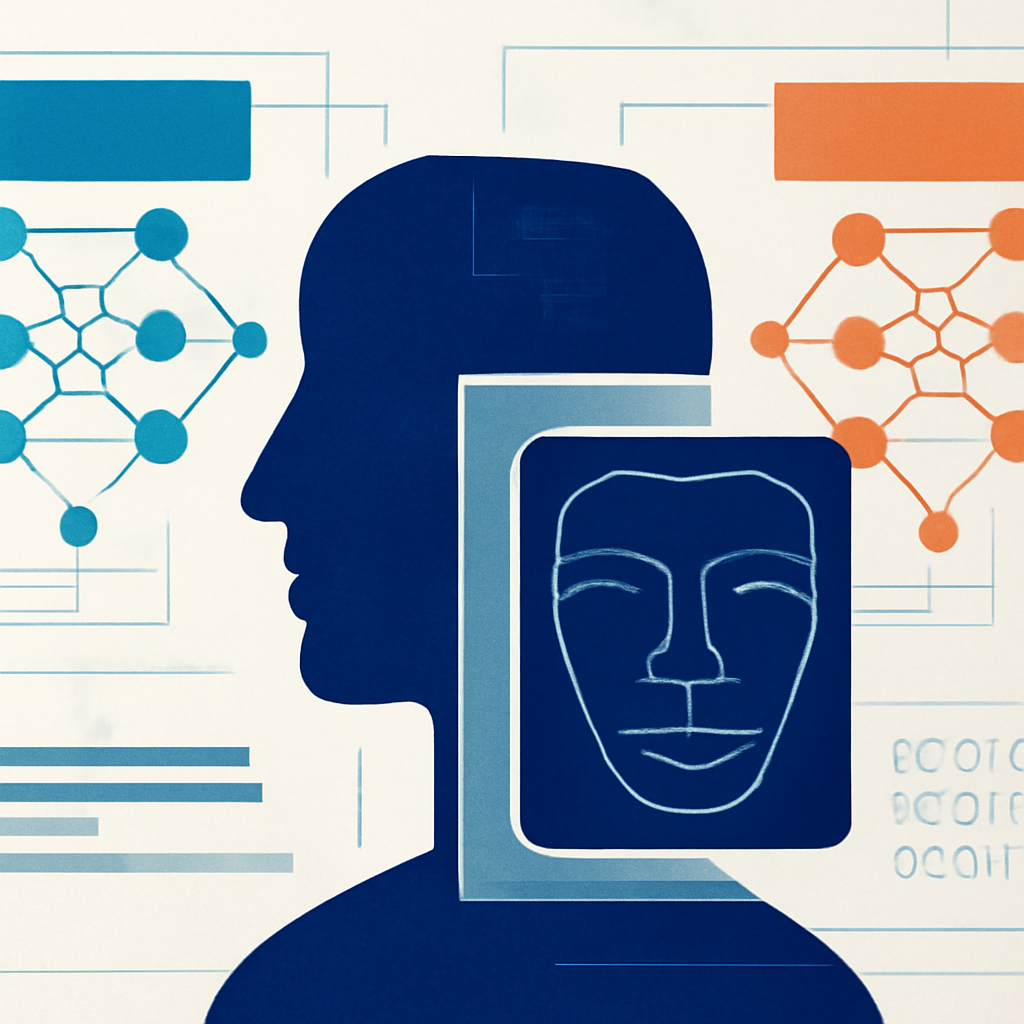
An independent researcher from Indonesia has developed IMGNet, a groundbreaking face verification model that utilizes sign patterns for identifying individuals instead of the widely-used cosine similarity method. This new approach has shown impressive results, achieving a 96.27% accuracy rate on the LFW dataset using a model that is only 10.58 MB in size, trained on 490,000 images from the CASIA-WebFace dataset.
Why It Matters
The significance of this development lies in its potential to enhance face verification systems, which are crucial for security and identification applications. By using a method that focuses on locally consistent sign patterns rather than absolute values, IMGNet could lead to more accurate and reliable identification. When applied to existing ArcFace embeddings without retraining, it achieved a remarkable 99.58% accuracy on LFW, coming very close to the performance of traditional methods.
Context
Traditionally, face verification models rely heavily on cosine similarity to compare embedding vectors. However, this approach can sometimes overlook variations in the data that are crucial for accurate identification. The researcher draws an analogy from Javanese and Sundanese languages to illustrate the concept of preserving identity through relational structures, emphasizing the need for a more nuanced comparison method in machine learning.
What It Means
IMGNet introduces several innovative components, including the SW Block that replaces standard convolution with a multi-scale relational operation, and a unique IMG Sign MSE Loss, which focuses solely on sign pattern agreement rather than amplitude. This shift could signify a new direction in face verification technology, where metrics are co-designed with training objectives to improve accuracy. Preliminary findings also suggest that the model's approach may induce spatial organization within the embedding space, leading to further exploration in the field of face recognition. The implications of this research could reshape how identity verification is approached in various industries.