What Happened
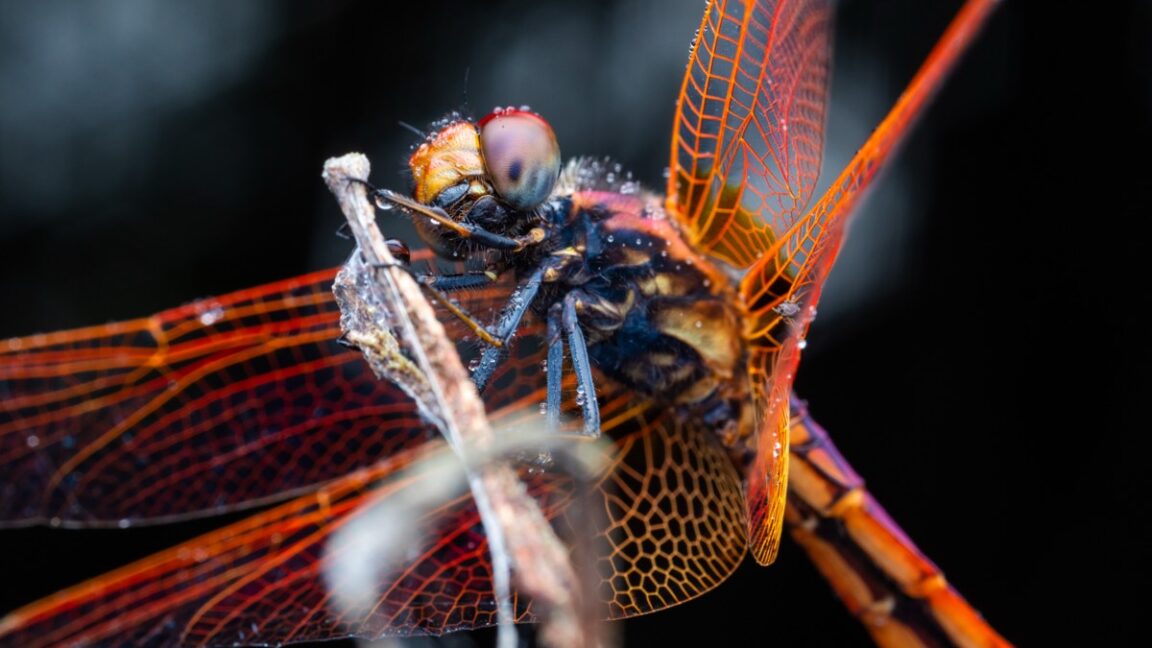
Recent research has uncovered that male dragonflies, specifically the Trithemis Aurora species, exhibit complex aerial maneuvers similar to those of fighter pilots during territorial disputes. These dragonflies engage in mid-air "dogfights" to defend their breeding territory, employing different strategies than when they pursue prey. The study, published in the Journal of the Royal Society Interface, indicates that these aerial tactics are driven by relatively simple rules focused on maintaining a tactical advantage.
Why It Matters
Understanding the flight behavior of dragonflies not only sheds light on their competitive interactions but also has broader implications for technology. The insights gained from these natural maneuvers could inform the development of smarter drones that navigate using simple vision-based systems, rather than relying on complex computations. This could enhance drone performance in various applications, from environmental monitoring to search and rescue missions.
Context
Historically, studies of dragonflies have relied heavily on visual observations or single-camera recordings, limiting the understanding of their flight dynamics. The new approach involved a sophisticated setup with two synchronized cameras to capture the intricate 3D trajectories of dragonflies in their territorial skirmishes. This method allowed researchers to compare male-on-male interactions with the flight patterns used during prey interception, providing a more comprehensive understanding of their flight mechanics.
What It Means
The findings suggest that the aerial tactics of dragonflies are not just instinctual but follow specific rules that can be modeled and studied. This research offers a pathway to apply biological principles to technological advancements in drone design. As we learn more about the natural world, we can harness its complexities to create smarter, more efficient machines that mimic these fascinating aerial feats.