What Happened
The conversation around artificial intelligence (AI) often centers on its role as a productivity booster for tasks like writing, coding, and data analysis. However, there's a growing perspective that AI could have a more profound impact by reshaping the fundamental structures of companies themselves. Currently, many organizations operate under traditional frameworks that are constrained by human limitations, such as communication bottlenecks and hierarchical layers.
Why It Matters
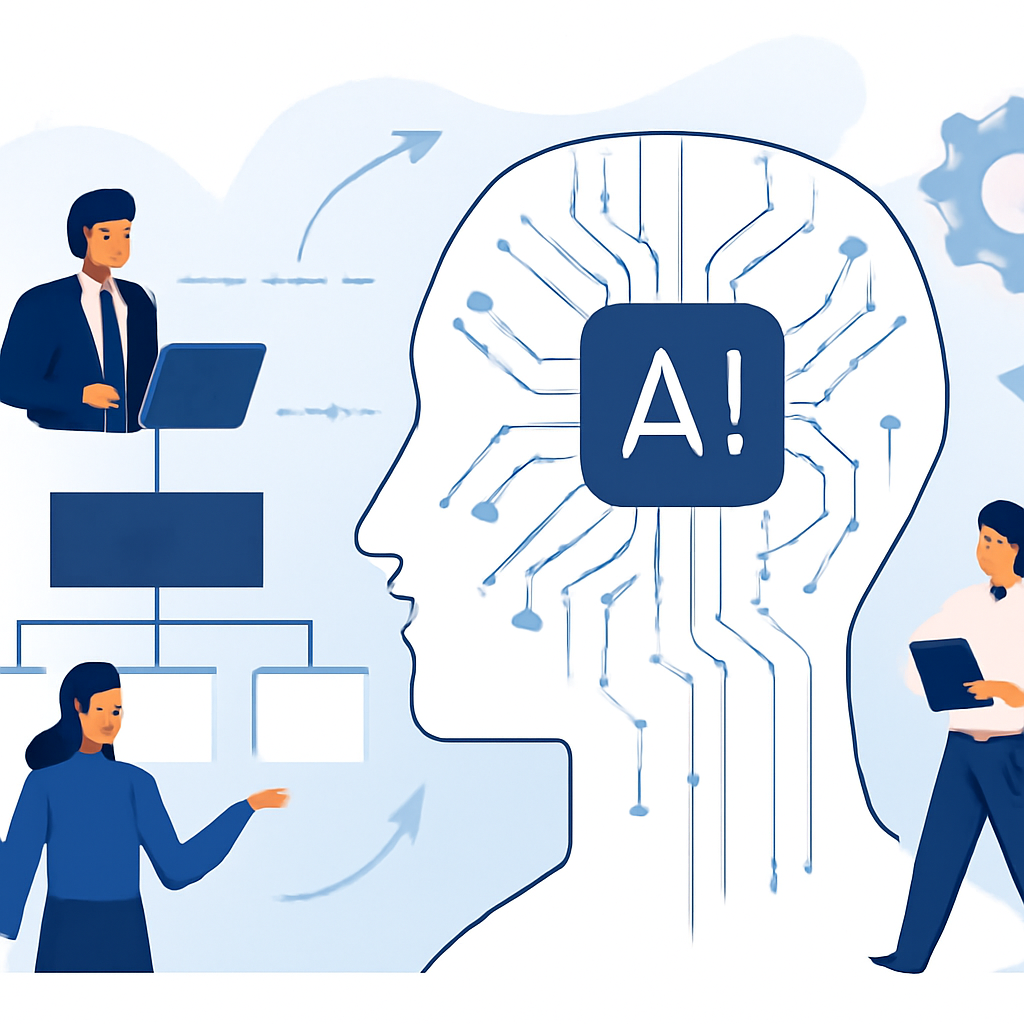
The implications of integrating AI into the structural framework of organizations could be significant. By automating coordination and improving information flow, AI could lead to leaner organizational structures. This might reduce layers of management, speed up the detection of workflow issues, and enable dynamic task allocation based on real-time data. In essence, it could transform the static nature of most business hierarchies into more adaptive systems that respond fluidly to the needs of the workforce.
Context
Historically, communication tools like email were designed to streamline information sharing but often ended up complicating organizational behavior. While intended to reduce friction, email increased communication volume and created expectations of constant availability, ultimately shaping workflows around message flow. This demonstrates that while technology can enhance productivity, it can also entrench existing inefficiencies if not leveraged correctly. AI has the potential to break free from these constraints by providing insights into real-time work processes.
What It Means
If AI can effectively track work in real time and identify bottlenecks as they arise, organizations might evolve beyond their traditional hierarchies. Managers could shift focus from merely supervising tasks to designing systems that optimize workflows. This transformation would allow organizations to respond more swiftly to challenges and opportunities, potentially leading to increased agility and productivity. As the technology continues to develop, it raises questions about whether current AI applications are sufficient to drive such structural changes or if we are still confined to enhancing productivity alone.