What Happened
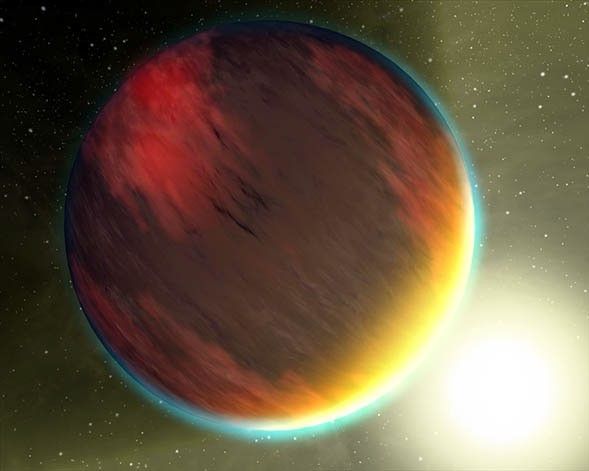
Recent observations have shown helium escaping from the atmosphere of an exoplanet orbiting the star LHS 1140, located about 50 light-years away. This phenomenon provides a rare glimpse into the atmospheric dynamics of exoplanets and raises questions about how these atmospheres evolve over time.
Why It Matters
Understanding the loss of helium can offer insights into the atmospheric composition and history of exoplanets. As helium is a key component of the universe's early atmospheres, knowing how and why it escapes helps scientists piece together the puzzle of planetary evolution. This could reshape our understanding of how atmospheres might be retained or transformed across various planets and how these factors influence the potential habitability of exoplanets.
Context
The study of exoplanet atmospheres has become increasingly important as we search for life beyond our solar system. Initially composed mostly of hydrogen and helium, planets lose these lighter gases over time due to various processes. For instance, the proximity to a star, the planet's gravity, and the presence of a magnetic field all play a role in whether lighter elements like helium are retained or lost to space. The dynamics of these processes can be complex, making it challenging to predict what we might find on other worlds.
What It Means
The discovery of helium loss on LHS 1140 suggests that this exoplanet has undergone significant atmospheric changes since its formation. By analyzing the rate of helium escape, researchers can infer details about the remaining atmosphere and its ability to support potential life. This finding emphasizes the need for further observation and study of exoplanets, as each one could reveal unique stories about how atmospheres evolve and interact with their environments.