What happened
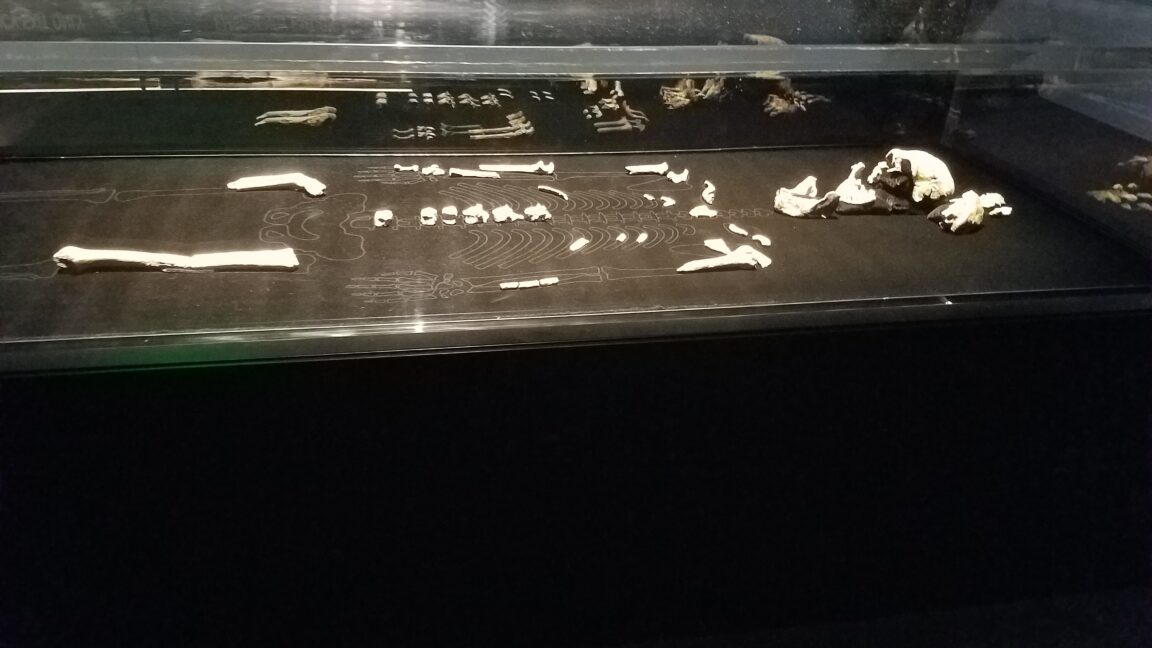
Recent studies of the Homo naledi skeletons found in Rising Star Cave have revealed that all of the remains belong to females. This finding, based on dental enamel proteins, suggests a potential reason for how these ancient hominins ended up in the cave.
Why this matters
The fact that only female Homo naledi skeletons were discovered opens up new discussions about their social structure and behaviors. It challenges the earlier assumptions that these individuals might have accidentally fallen into the cave. Instead, this uniformity may indicate a deliberate action, possibly related to death rituals or communal practices within the species.
Context
In 2013, a team of researchers led by Lee Berger unearthed more than 20 individuals of Homo naledi, which lived between 335,000 and 236,000 years ago. Their discovery sparked debates regarding the circumstances under which these hominins ended up in the cave. The findings of exclusively female skeletons add a new layer to the ongoing conversation about their social dynamics and possible cultural practices.
What this means
The all-female composition of the Homo naledi remains suggests that these individuals might have been intentionally placed in the cave, hinting at a complex social structure. This could imply that the group had practices related to death that are similar to modern human behaviors. The implications for understanding the evolution of social norms and rituals in early hominins are profound, opening avenues for further research into the lives of our distant relatives.