What happened
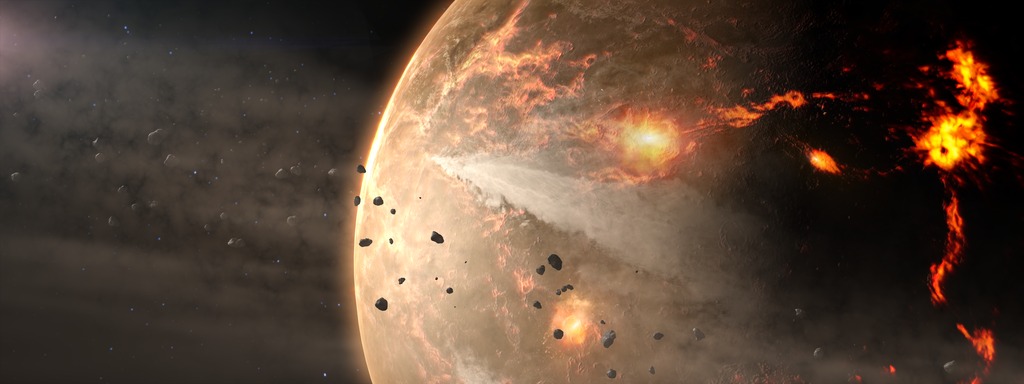
Researchers have proposed a groundbreaking theory about the formation of Earth's continents, suggesting that a series of intense asteroid impacts around four billion years ago were key to creating our planet's first buoyant, silica-rich landmasses. This hypothesis challenges long-standing mysteries regarding why and how continents began to form during that specific time frame in Earth's history.
Why this matters
Understanding the formation of continents is significant for multiple reasons. It not only sheds light on Earth's geological history but also helps us comprehend the processes that shaped our planet, distinguishing it from others in the solar system. This knowledge can influence theories about planetary formation and the conditions necessary for sustaining life.
Context
The Earth is approximately 4.5 billion years old, and the oldest known continental rocks trace back to around 4.03 billion years. However, the geological records from this era are sparse, making it challenging for scientists to piece together a clear picture of early Earth. Previous theories largely relied on limited geological evidence, leading to significant debates among geologists about the origins of continental crust.
What this means
If the theory of asteroid bombardment is correct, it implies that the early Earth was a very dynamic and volatile environment. This could change our understanding of how landmasses are formed and evolve over time. The idea that cosmic events can influence geological processes on Earth also opens up new avenues for research, potentially linking extraterrestrial impacts to significant terrestrial changes. Overall, this research highlights the complex interplay between celestial phenomena and the development of our planet’s surface.