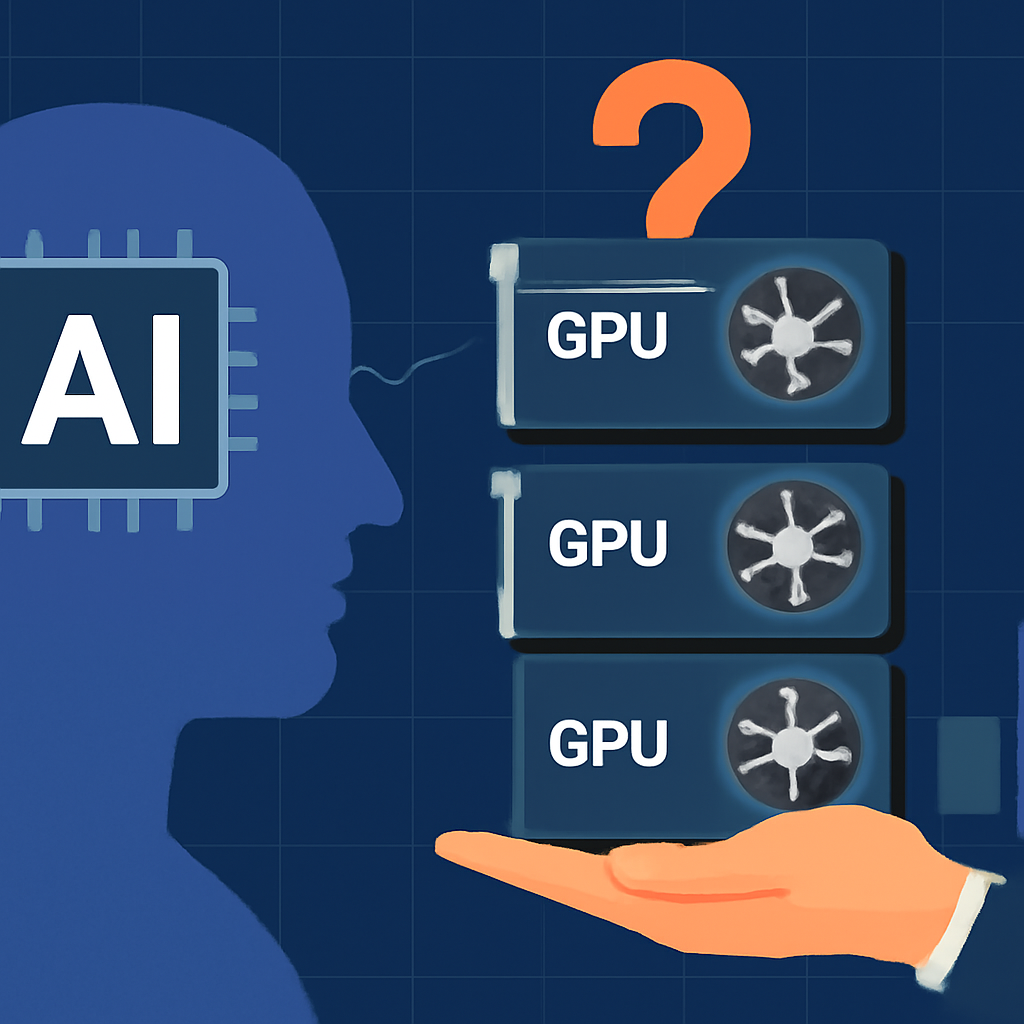
The narrative around the AI industry is dominated by claims of a shortage of GPUs, particularly high-demand models like the H100 and B200. However, a recent analysis of GPU performance during a training job reveals an intriguing reality: many GPUs are spending the majority of their time idle rather than actively processing data.
This idle state occurs not because the GPUs are too slow or incapable, but because they are frequently waiting for the next batch of data to be delivered. In fact, during the monitoring period, the GPU was observed to alternate between brief bursts of activity and long stretches of inactivity, highlighted by the distinction between the active (green) and idle (orange) states. This observation reframes the conversation around the so-called GPU shortage.
The conclusion drawn from this profiling points to a significant misallocation of resources within the AI infrastructure. The expensive GPUs are not the bottleneck; it’s the data pipeline that feeds them that is lacking efficiency. Essentially, even if organizations were to increase their GPU count tenfold, they might still experience idle GPUs if the underlying data movement is not optimized.
This leads to a broader question: how much of the AI compute shortage stems from actual hardware scarcity versus a hidden utilization issue? When organizations announce massive investments in datacenters and capital expenditures, should we consider the possibility that some of these investments are addressing inefficiencies rather than true shortages? The demand for computational power is certainly real, but the data suggests that the solution might not lie solely in acquiring more hardware. Instead, attention should be directed toward improving data handling and processing efficiency to ensure that existing GPUs can be utilized to their full potential.