What happened
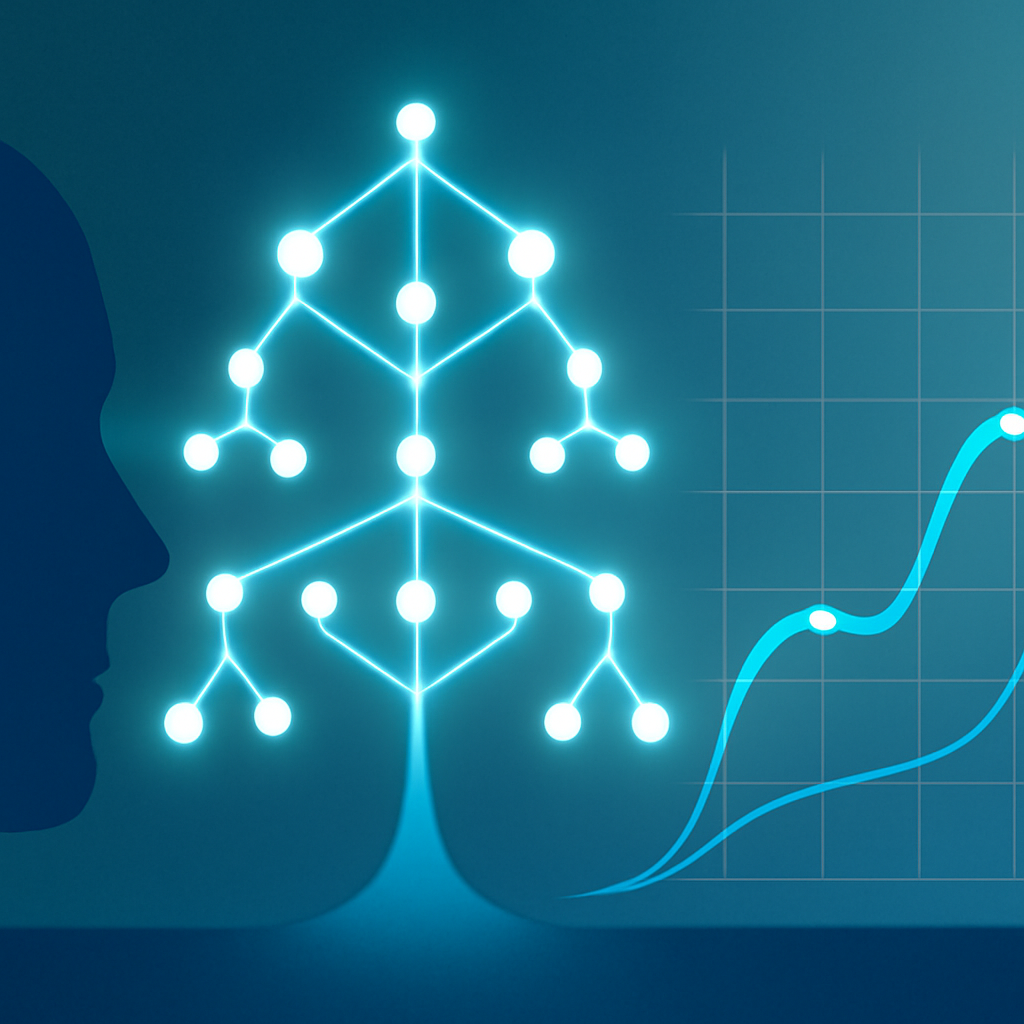
Recently, EML trees have gained attention as a fascinating mathematical concept that allows for the representation of all elementary functions through composition. A new theorem demonstrates that these EML trees can serve as universal approximators, meaning they can approximate a wide range of functions with high accuracy. This discovery is not just a theoretical exercise; it has potential implications for various fields relying on function approximation.
Why this matters
The ability to approximate any function using EML trees could revolutionize many areas, including machine learning and numerical analysis. It suggests that complex functions, including polynomials and other continuous functions, can be represented with a relatively simple structure. For users in data science and engineering, this could mean more efficient algorithms and models that are easier to train and deploy, as well as enhanced performance in tasks that require function approximation.
Context
Historically, the concept of universal approximation has been vital in understanding how neural networks and other function approximation techniques work. Polynomials are dense in various functional spaces, which means they can be used to approximate a broad range of functions. The EML trees leverage this principle by introducing a set of building blocks for function representation, allowing for the construction of more complex functions from simpler ones. The research also addresses challenges, such as the limitations of the natural logarithm for nonpositive inputs, providing a more robust framework.
What this means
The findings about EML trees suggest a promising avenue for future research and application in mathematical modeling and computational methods. By demonstrating that EML trees can serve as universal approximators, researchers may develop new techniques that improve the efficiency and accuracy of function approximation in practice. This could lead to innovations in technology and science, making it easier to model complex systems and solve intricate problems across various domains.