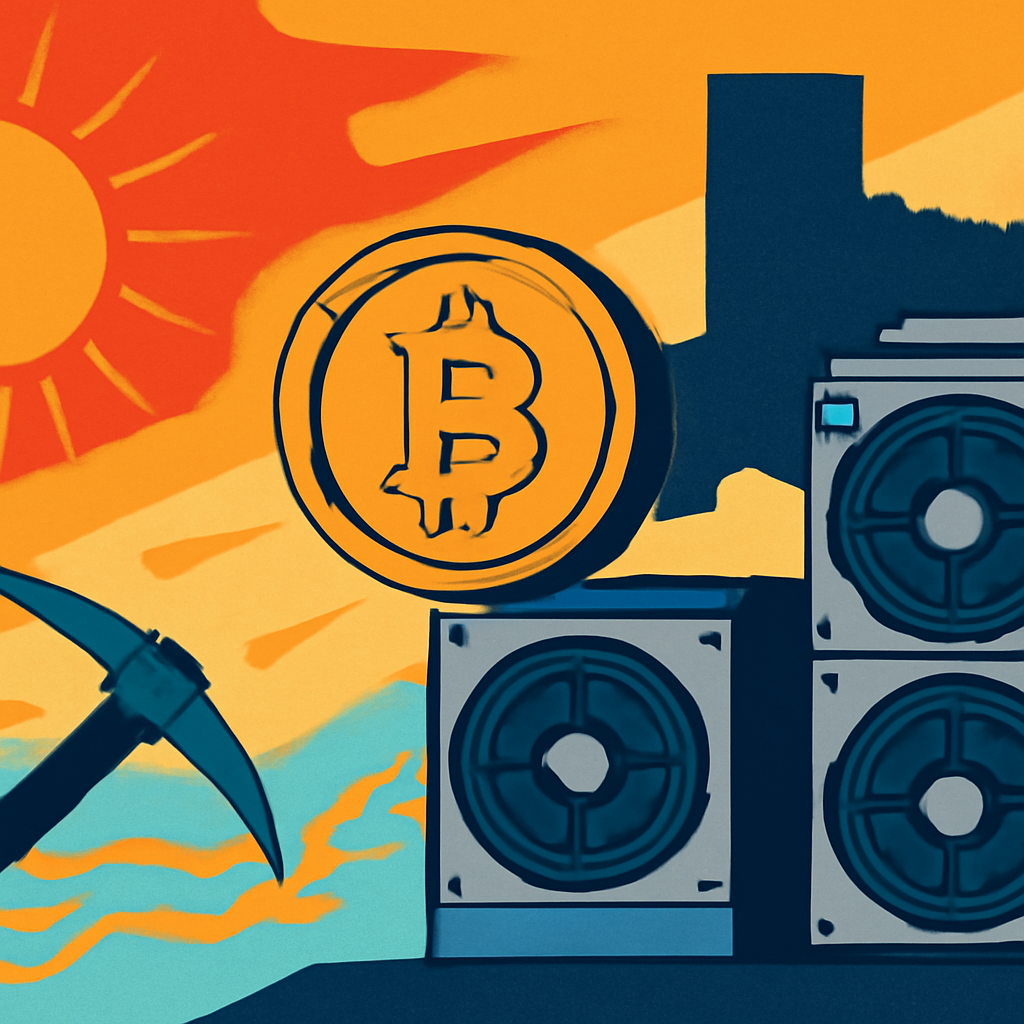
Bitcoin Mining's Energy Debate Unveiled
In a striking turn of events during the 2023 Texas heat wave, Riot Platforms, a major Bitcoin mining company, found that it generated more revenue by powering down than through actual mining activities. This incident underscores the contentious discussions surrounding Bitcoin's energy consumption, which is often misrepresented in various narratives.
Bitcoin is reported to consume around 173 terawatt-hours (TWh) annually, accounting for approximately 0.75% of the world's electricity, as per the Cambridge Centre for Alternative Finance (CBECI). While some comparisons, like saying Bitcoin uses "more energy than Argentina," serve to alarm, others, such as "less than the world’s tumble dryers," aim to soothe. The truth is nuanced; Bitcoin's energy usage is comparable to gold mining, but how these figures are framed depends on the chosen metrics.
The energy consumed in Bitcoin mining serves as a crucial security mechanism. The proof-of-work system relies on electricity to maintain the integrity of the blockchain, meaning that any push to reduce Bitcoin's energy use equates to reducing the security against attacks.
Bitcoin miners are unique in their ability to buy electricity from virtually anywhere, rapidly adjusting their demand based on available power, often utilizing stranded resources like excess hydroelectric power, flared gas, or curtailed wind energy. This strategy isn’t necessarily about environmentalism; it’s purely economic, as these stranded resources are the cheapest available.
In August 2023, Riot Platforms earned $31.7 million primarily by reducing its energy load—selling back pre-purchased power to the grid and earning demand-response credits—while only making $8.9 million through Bitcoin mining. During the peak heat, Riot curtailed over 95% of its energy consumption, demonstrating how adaptable these operations can be.
Critics of Bitcoin mining raise valid points regarding environmental concerns, such as the water usage and e-waste associated with operations. Some mining activities are indeed powered by fossil fuels, and the noise from mining facilities can be a legitimate complaint from nearby residents. However, the more substantial critiques often lack factual backing, which leads to them being dismissed as fear, uncertainty, and doubt (FUD).
A common misconception is the belief that each Bitcoin transaction consumes a fixed amount of energy. This is a misunderstanding of how mining works; the energy required for mining secures the entire network and fluctuates based on market conditions and block rewards, not merely on the number of transactions processed. The actual energy per transaction is not only difficult to quantify but is also decreasing over time, making it a misleading metric.
For those looking for a deeper dive into this topic, a comprehensive resource is available at Learn Bitcoin. The conversation remains open, and I welcome any discussions backed by real data in the comments section.