What happened
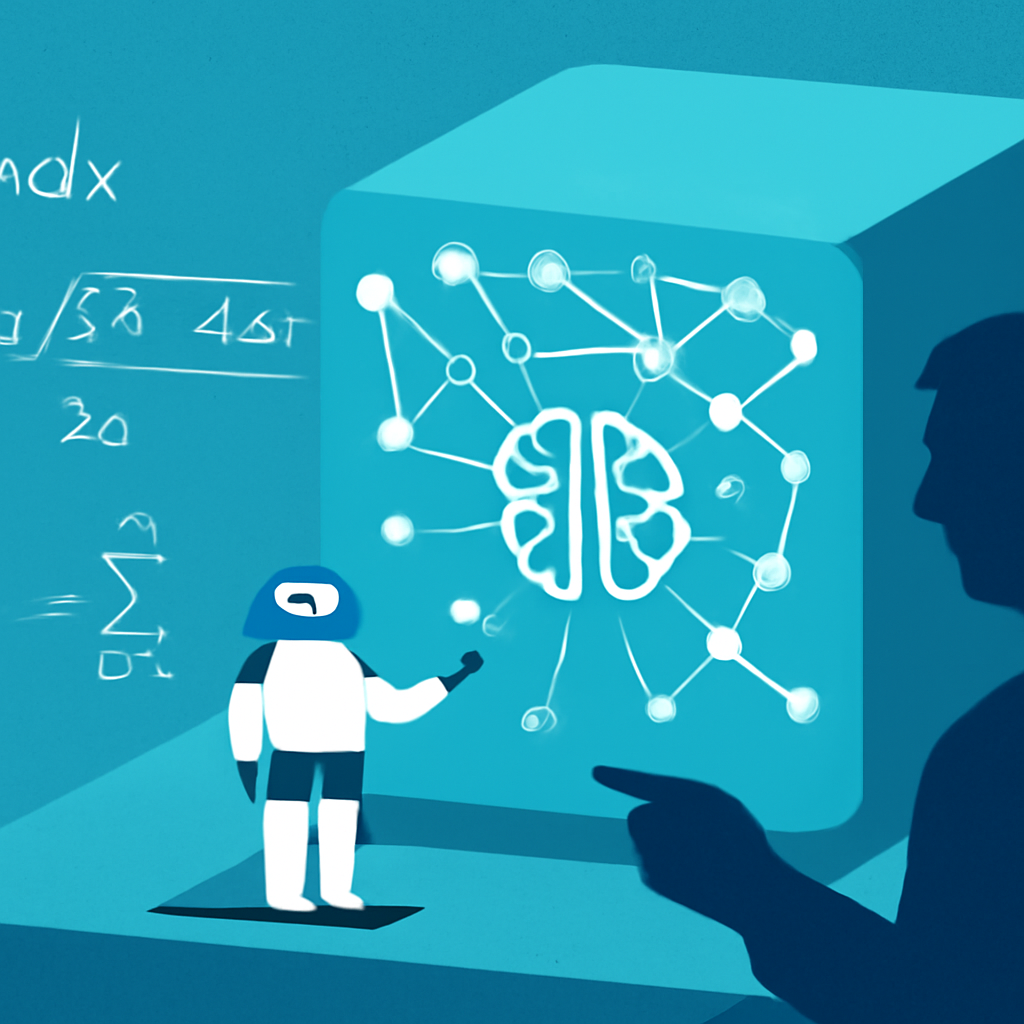
A new model known as MathFormer has shown impressive results in symbolic mathematics by converting factorized expressions into their expanded forms. For example, it successfully transformed (7-3z)(-5z-9) into 15z^2 - 8*z - 63. This model, which has only 4 million parameters, achieved an accuracy of approximately 98.6% in its tasks, raising questions about how mathematical reasoning is processed in AI models.
Why this matters
The high accuracy of MathFormer suggests that it may not be utilizing traditional mathematical reasoning, such as understanding operators and variables. Instead, it appears to rely on recognizing patterns in the structure of mathematical expressions. This finding could have significant implications for how we approach the training of AI in math-related tasks and may lead to the development of more efficient models that prioritize pattern recognition over complex reasoning.
Context
Historically, AI has struggled with symbolic mathematics, often requiring extensive training on mathematical principles. Conventional models tend to be larger and more complex, emphasizing the need for deeper understanding of mathematical concepts. MathFormer challenges this paradigm by demonstrating that even a smaller, simplified model can achieve remarkable results, prompting a reevaluation of AI training methodologies in this domain.
What this means
The success of MathFormer indicates that AI may be capable of performing tasks traditionally thought to require reasoning skills purely through pattern matching. As this model's architecture is based on attention mechanisms, it raises intriguing questions about the potential for reinforcement learning (RL) to enhance this approach. Understanding the underlying processes of such models could lead to breakthroughs in how we teach AI to handle not just math, but also other complex reasoning tasks.